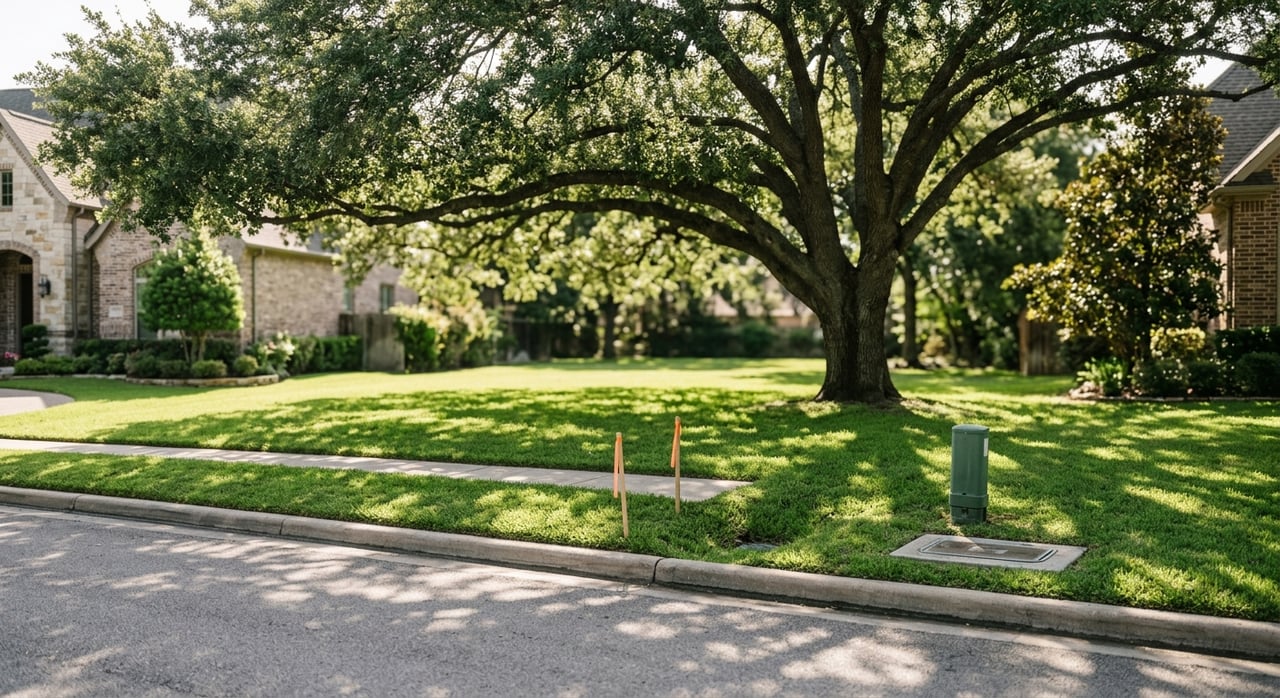
How To Evaluate A Preston Hollow Lot For A Custom Home
July 16, 2026
July 16, 2026
Thinking about buying land in Preston Hollow for a custom home? A lot can look perfect at first glance, but the real question is how much of that land you can actually use, what it will cost to prepare, and whether it fits the home you want to build. If you want to avoid expensive surprises, a smart evaluation process can help you compare lots with much more confidence. Let’s dive in.
In Preston Hollow, lot sizes can vary widely. Recent active land listings range from about 6,795 square feet to roughly 1.5 acres, with several around 0.4 to 0.5 acre. That means your design options can look very different from one property to the next, even within the same general area.
A smaller infill lot may require a tighter footprint, more vertical design, and careful planning for the driveway and outdoor space. A larger lot can offer more flexibility for privacy, tree preservation, and a home layout that responds to the site. Before you focus on the asking price, focus on how the lot size shapes what is realistically possible.
Dallas zoning is district-specific, and it can affect setbacks, lot size, density, lot coverage, and floor area ratio. In other words, two lots that look similar on paper may allow very different building outcomes. This is one of the first items to confirm before you move forward.
The City of Dallas Map Hub is a strong starting point for parcel-level research. It includes zoning and cases, deed restrictions, specific use permits, area plans, HOAs and neighborhood associations, conservation districts, and floodplain layers. For a Preston Hollow buyer, this first screen can quickly show whether a lot deserves deeper review.
Zoning does not always tell the whole story. Dallas notes that setbacks can sometimes be found on the certified plat, and they may be greater or lesser because of platted building lines or more restrictive setbacks within the same block. That means the lot’s true buildable area may be smaller or shaped differently than you expect.
In Preston Hollow, neighborhood context matters too. The city’s Northwest Highway & Preston Road Area Plan describes the area as stable and protected, with estate properties and a mix of housing types. For you, that means the surrounding homes, their placement on the lot, and overall street rhythm can all matter when evaluating whether a site fits your goals.
One of the biggest mistakes buyers make is assuming the full lot size equals usable building area. In reality, the buildable envelope is shaped by setbacks, building lines, easements, access points, and site constraints. This is where a lot can either work beautifully or become frustrating fast.
Before making an offer, pull the certified plat and survey. Review the lot width and depth, required yards, building lines, alley access if present, and any easements that may affect placement of the house, pool, garage, or driveway.
Lot orientation can change how a site functions. Dallas notes that corner lots can have two front yards in some cases, which can affect setbacks and design flexibility. That can be especially important if you want a wider footprint or a certain garage placement.
Alley access can also affect the site plan in a useful way, but only if the lot dimensions and easements support it. This is why measuring the actual lot against neighboring homes is so helpful. The homes already built on the block often reveal how the practical envelope works in real life.
Mature trees are one of the most important lot-evaluation factors in Preston Hollow. They can add beauty and presence, but they can also affect siting, permitting, and cost. If you ignore trees early, you may end up redesigning the home later.
Dallas protects trees that are 8 inches in diameter and greater. The city also states that a tree-removal permit is required for protected-tree removal unless the lot is under 2 acres and contains a single-family or duplex use. Vacant lots, lots 2 acres and greater, and lots with a structure being demolished require a permit.
A teardown site and a true vacant lot may not be treated the same way during your evaluation. Dallas materials note that demolition permit submission can make the lot vacant for tree analysis. That means a site that seems straightforward at first may trigger a different level of tree review once demolition starts.
The application process can also require a tree survey and mitigation plan. On a practical level, that can affect timeline, carrying costs, and the final placement of the house.
Dallas also states that tree protection measures must be in place before disturbance begins. In addition, trees should not be planted within 10 feet of water or wastewater lines or within easements, and larger trees have clearance limits near overhead electric lines.
For you, this means a large lot may still have a tighter usable area than expected. Mature trees and utility corridors can work together to shrink the space available for the home, driveway, additions, or landscaping.
Floodplain and drainage should be treated as pre-offer questions, not afterthoughts. Dallas advises checking whether a parcel lies in the 1% annual chance floodplain by using DCAD, the city’s zoning GIS, or FEMA’s NFHL layer. If a lot is near a creek, ditch, or low spot, this step becomes even more important.
Drainage can affect far more than insurance questions. It can influence grading, site work, vegetation removal, and where improvements can go. Dallas also notes that vegetation removal is prohibited in floodplain and escarpment zones without approval.
If you are comparing multiple lots, one with simpler drainage conditions may be the better value even if its list price is higher. A cleaner site can reduce uncertainty and help your project move more smoothly.
In North Texas, foundation planning can be highly soil-sensitive. TxDOT notes that Texas has some of the most expansive soils in the country and says a geotechnical investigation is essential to establish the right foundation treatment. For a custom home, that is a critical piece of due diligence.
A soil report helps you understand whether the foundation cost is likely to be routine or significantly higher. It also gives your design and construction team better information before plans are finalized. Ordering this early can prevent expensive redesigns later.
Utilities are easy to overlook when the lot itself is the main attraction. But Dallas Water Utilities says that for a new building or addition, the applicant should confirm whether water or wastewater lines are already in place, identify required fees using the legal description, and obtain permits before arranging installation. The owner is responsible for verifying that utilities are available.
That responsibility matters because installation timing can affect your entire project calendar. The current service-installation form notes that meter delivery may take up to 8 weeks. If your design, financing, or construction timing is tight, that lead time can become important very quickly.
Dallas Water Utilities provides infrastructure resources that include water and wastewater maps, fire-hydrant flow test maps, and utility engineering design sheets. These tools can help your team understand service location, access, and potential fire-flow constraints before final design decisions are made.
For a buyer, the goal is simple: confirm serviceability before the lot becomes your problem. A beautiful site is much easier to love when the basics are clear.
If you want a practical way to compare sites, start with this checklist:
The right questions can save you time and money. They also help you compare lots based on real buildability, not just curb appeal.
Ask these questions early:
In Preston Hollow, a lot is never just a lot. Its value comes from how zoning, plats, setbacks, trees, drainage, soils, and utilities work together to shape the final home. The better your due diligence, the more confidently you can move from land search to design.
A disciplined review process also helps you avoid overpaying for land that looks better than it builds. If you want to pursue a custom home in Preston Hollow, careful analysis at the start can protect both your vision and your budget.
If you are evaluating land in Preston Hollow and want a clear, data-driven perspective before you move forward, Grant Gold can help you assess the lot, spot risks early, and make a smarter acquisition decision.
Stay up to date on the latest real estate trends.

Highland Park

Get assistance in determining current property value, crafting a competitive offer, writing and negotiating a contract, and much more. Contact me today.