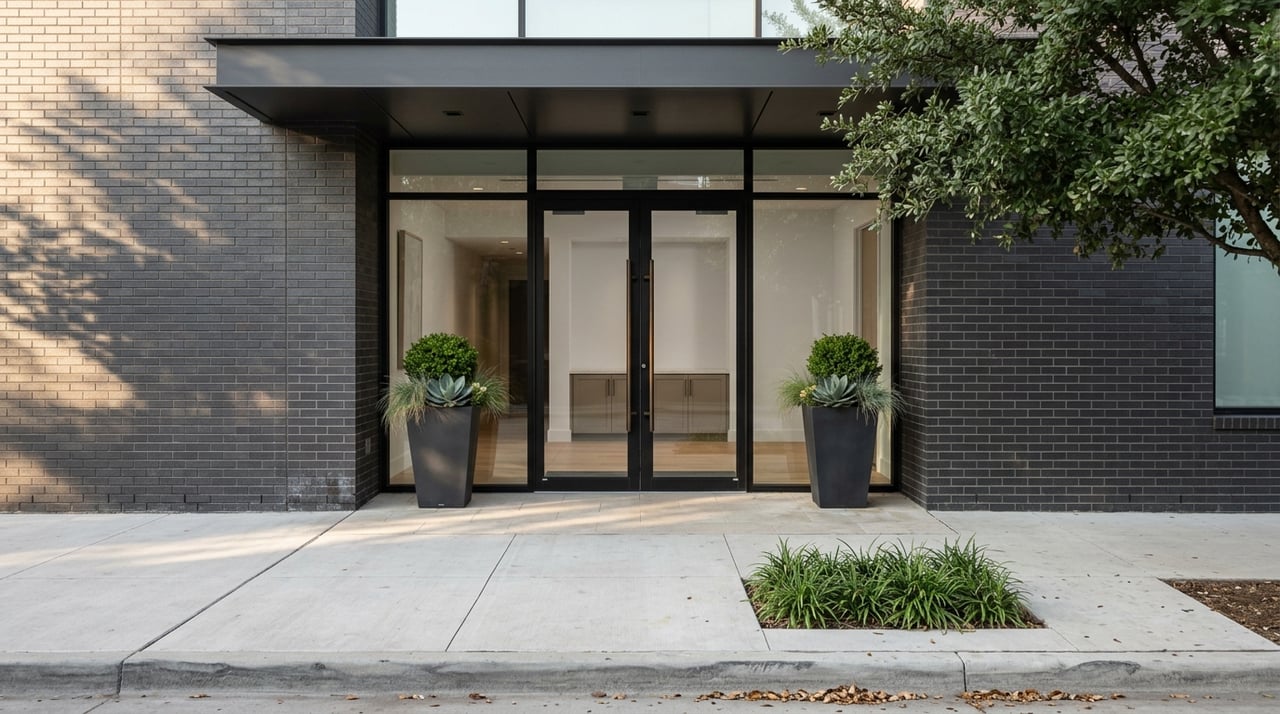
Is Uptown Dallas Car Free Living Right for You?
July 9, 2026
July 9, 2026
If you want to live in Dallas with fewer car keys and more convenience, Uptown is one of the strongest places to do it. Many buyers are drawn to the idea of walking to dinner, hopping on transit for work, and keeping errands close to home, but they also want a realistic picture of what daily life actually feels like. In this guide, you’ll see where car-free living in Uptown works well, where it still gets harder, and how to choose a home that supports a car-light routine. Let’s dive in.
Uptown is one of the few Dallas neighborhoods where a largely car-free lifestyle is genuinely realistic for many households. Uptown Dallas Inc. describes the area as walkable, with wide sidewalks, trails, pocket parks, and patios that make it easier to move through the neighborhood without driving.
The numbers support that reputation. Uptown Dallas Inc. says the district has one of the highest walkability scores in DFW at 92+, and Walk Score reports a 97 out of 100 for an Uptown Dallas location, along with a 68 transit score and 81 bike score. By comparison, Dallas averages 46, which shows just how different Uptown feels from much of the city.
That does not mean every block works the same way. Exact walkability can vary depending on how close you are to transit, groceries, trails, and your regular destinations. Still, if your goal is to drive less, Uptown gives you a much stronger starting point than most Dallas neighborhoods.
One of Uptown’s biggest advantages is access to Cityplace/Uptown Station. DART says this station serves the Blue, Orange, and Red lines, which connect riders to work, shopping, and entertainment destinations across Dallas and surrounding cities.
For many buyers, that makes a major difference in day-to-day planning. If you work in Uptown, downtown, or along a DART rail corridor, your commute may be much easier to manage without a car than it would be in other parts of Dallas.
The McKinney Avenue Trolley adds another useful layer. DART says this historic streetcar links the downtown Dallas Arts District with Uptown, including West Village, connects to DART Rail at Cityplace/Uptown Station, runs seven days a week, and is free.
That matters because car-free living is easier when you have more than one mobility option. Walking can cover short trips, rail can handle longer commutes, and the trolley can help connect your routine inside the urban core.
A car-light lifestyle only works if your basics are close. Uptown has practical day-to-day utility, not just dining and nightlife, which is one of the main reasons it stands out.
Whole Foods has an Uptown Dallas store at 2510 McKinney Ave, and Tom Thumb lists a store at 2380 Field St serving areas that include Uptown and the Arts District. That gives you accessible grocery options without needing to leave the central city for every shopping trip.
Fitness is also part of the equation. Uptown Dallas Inc.’s directory includes HOTWORX UPTOWN at 2808 McKinney Ave and Trophy Fitness at 2812 Vine Street, and the district also promotes fitness pop-ups and community events.
When your groceries, workouts, and casual meals are close together, your weekly routine becomes much easier to manage on foot, by bike, or with short transit trips. That convenience is what makes the neighborhood feel functional, not just fun.
Uptown’s lifestyle appeal is a real part of the car-free conversation. Friends of the Katy Trail says the 3.5-mile trail serves recreation, wellness, commuting, and access to nearby restaurants and businesses.
That makes the trail more than a place to exercise. It can also be part of how you move through your week, especially if you like walking or biking between home, dining, and everyday stops.
Uptown Dallas Inc. also highlights restaurants, rooftops, art, live music, and year-round events across the district. If many of the places you enjoy are already within Uptown or nearby downtown, you may find yourself driving far less than expected.
Even in Uptown, the more accurate expectation is often car-optional rather than fully car-free. The neighborhood supports many core trips well, but not every errand across the larger metro is equally easy without a vehicle.
A car can still be useful for large grocery runs, warehouse club shopping, trips to outer suburbs, airport runs with luggage, or visiting friends and family in lower-density parts of the region. That is especially true if your work or personal routine regularly pulls you outside the central city.
This is an important mindset shift for buyers. The question is often not, “Can I live with no car at all?” but rather, “How often would I realistically need one?”
Walkability on paper and comfort in real life are not always the same thing. Dallas weather is a real tradeoff, especially in the hottest months.
NOAA monthly normals for Dallas Redbird Airport show average highs of 95.9°F in July and 96.4°F in August. In practical terms, that means a quick spring walk to lunch may feel very different in midsummer.
If you plan to live car-light, weather should be part of your home search. A shorter walk to transit, groceries, or fitness can make a noticeable difference when heat becomes part of the daily routine.
Convenience and activity often come together. Uptown Dallas Inc. emphasizes patios, rooftops, art, live music, and year-round events, which help create the neighborhood’s lively feel.
For many buyers, that energy is exactly the point. For others, it can also mean more traffic, noise, and activity than a more suburban setting.
That is why block-by-block feel matters. Two homes in the same neighborhood can support very different day-to-day experiences depending on street activity, building orientation, and proximity to nightlife corridors.
If your goal is to minimize driving, location inside Uptown matters just as much as location in Uptown. In practical terms, the most useful homes are often the ones closest to Cityplace/Uptown Station, the McKinney Avenue corridor, the Katy Trail, and nearby grocery and fitness options.
That approach keeps your daily routine compact. The less distance between home and your key weekly stops, the more likely you are to actually live the car-light lifestyle you want.
This is where a strategic home search helps. Instead of looking only at square footage or finishes, it makes sense to evaluate how the property fits your actual movement patterns.
Before you commit to a home in Uptown, it helps to pressure-test your routine. A beautiful property may still be a poor fit for car-free living if your daily stops are farther away than they appear on a map.
Use this checklist as you compare options:
A well-matched home can make the difference between driving less in theory and driving less in practice. That is especially true in a neighborhood where convenience changes from block to block.
If you want one of the most realistic car-light lifestyles in Dallas, Uptown deserves serious attention. Its strong walkability, access to DART rail, free trolley service, grocery options, fitness studios, and the Katy Trail all support a routine that can rely much less on a vehicle.
At the same time, the tradeoffs are real. Summer heat, regional travel, big errand days, and the neighborhood’s higher activity level can all shape how comfortable a fully car-free setup feels for you.
The best outcome usually comes from matching the home to your actual habits. If you want help identifying the right Uptown location for a more walkable, efficient lifestyle, Grant Gold can help you evaluate the options with a clear, local, data-driven approach.
Stay up to date on the latest real estate trends.

Highland Park
Get assistance in determining current property value, crafting a competitive offer, writing and negotiating a contract, and much more. Contact me today.