Trying to choose between a condo and a townhome in Uptown? You want walkability, style, and a smart investment, but the details on HOA fees, parking, and resale can be confusing. This guide breaks down the real differences so you can match your lifestyle and budget to the right home. Let’s dive in.
Uptown lifestyle snapshot
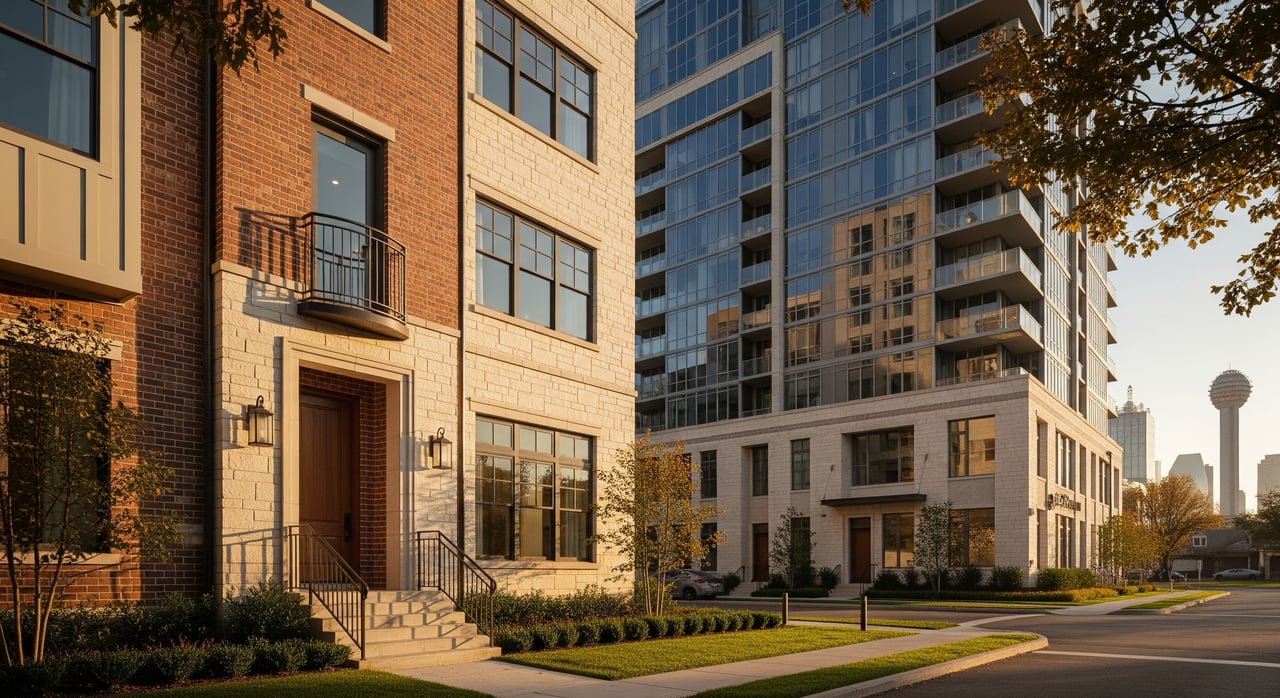
Uptown sits just north of downtown Dallas and gives you a dense, walkable neighborhood close to McKinney Avenue, the Katy Trail, dining, and job centers. Inventory tends to be tighter, with higher price per square foot than many suburbs. You trade private yard space for location, amenities, and a lower-maintenance lifestyle.
Ownership and legal basics
Condos
- You own the interior space of the unit and share ownership of common areas like the lobby, elevators, roof, and land.
- A condo association governs the building through a recorded declaration and bylaws.
- Building rules and project health matter for living experience, financing, and resale.
Townhomes
- You often own the structure and the land below it as fee simple property, although some projects use planned unit development or condo regimes.
- An HOA may manage shared walls, landscaping, or private drives, but owners usually control more of their home and exterior choices.
- Financing is often simpler than condos because many lenders treat townhomes like single-family attached homes.
HOA dues and ongoing costs
Condos
- Dues are often higher to cover building systems, insurance on common elements, and amenities like pools, gyms, or concierge services.
- Utilities such as water and trash may be included. On-site staff and security can increase monthly costs.
- Reserve levels are critical. Low reserves or deferred maintenance can lead to special assessments.
Townhomes
- Dues vary widely. Many Uptown townhome HOAs cover landscaping, private alleys, and shared elements but leave roof and exterior to owners.
- Monthly fees are often lower than full-service condos, unless the development includes security or luxury amenities.
What to request from the HOA
- Current budget and reserve study.
- Meeting minutes and recent financials.
- Master insurance coverage and deductible.
- Rules on rentals, pets, and alterations.
- History of special assessments and any pending litigation.
- Occupancy ratios, including owner-occupied vs investor units.
Maintenance and control
- Condos limit day-to-day upkeep because the association handles exteriors and building systems. This is appealing if you want a lock-and-leave lifestyle.
- Townhomes give you more control over exterior choices, landscaping, and private outdoor areas. You also take on more responsibility, such as roof and facade care, depending on the legal setup.
Privacy, noise, and layout
- Condos have more shared surfaces and vertical neighbors, especially in mid or high-rises. Soundproofing varies by building.
- Townhomes feel more house-like, with fewer neighbors above or below and options for patios or rooftop decks.
Parking, storage, and access
- Condos often use assigned or deeded garage spaces. Guest parking can be limited, and buying a second space may be required for two cars.
- Townhomes usually offer private garages and easier loading, which is helpful for multiple vehicles or frequent drivers.
- Condos can have storage lockers, while townhomes often provide more in-unit and garage storage.
Amenities and services
- Condos tend to offer more on-site amenities and services like pools, gyms, resident lounges, and concierge.
- Townhomes may have small shared courtyards or green space. Many buyers rely on neighborhood amenities like the Katy Trail rather than on-site features.
Financing, insurance, and taxes
Financing
- Condos can face project-level lending rules. High investor ratios, litigation, or low reserves can limit loan options and raise costs.
- Townhomes are often easier to finance with conventional programs, which can increase your buyer pool when you sell.
Insurance
- Condo owners typically carry an HO-6 policy for the interior and contents. The association insures the building and common areas.
- Townhome owners often need HO-3 coverage for the entire structure plus liability, depending on what the HOA controls.
Property taxes
- Taxes are based on assessed value. Townhomes often track single-family pricing, while condos can appraise differently because of shared land.
- For current rates and exemptions, check the local appraisal district and your tax advisor.
Resale, rentals, and liquidity
- Condos draw buyers who prioritize amenities and low maintenance. Resale can be sensitive to the building’s financial health and rules.
- Townhomes attract buyers who want garage parking, more privacy, and a house-like feel. They often appeal to a wider financing pool.
- Rental rules vary. Many condo associations cap rentals or set minimum lease terms. Townhomes may be more flexible, but always confirm HOA policies.
Decision framework for Uptown buyers
- Define lifestyle priorities. Do you want hotel-like services and amenities, or private outdoor space and a garage?
- Set budget and monthly comfort. Review price, HOA dues, insurance, taxes, and reserve strength to gauge special assessment risk.
- Plan financing and exit. If you want maximum loan flexibility and easier resale, townhomes often help. Strong condo projects can still be great if they are well run.
- Decide on maintenance. Prefer low upkeep, or willing to manage exterior items?
- Weigh privacy and noise. If overhead noise is a concern, consider townhomes or low-rise buildings with fewer shared surfaces.
- Map parking needs. If you have multiple vehicles or want EV charging, confirm deeded spaces and infrastructure.
- Vet the HOA. Review rules, budgets, reserves, and litigation early. Treat red flags as serious.
Which fits you
- Downsizers who value easy living, security, and on-site amenities often lean condo. You get less day-to-day maintenance and more services.
- Move-up buyers who want urban access plus garage parking and outdoor space often lean townhome. You get a house-like layout in a central location.
- If financing flexibility and faster resale are top priorities, a townhome may align better. A well-capitalized condo with strong reserves can also be a smart buy.
Local due diligence tips
- Parking is tight in parts of Uptown. Confirm deeded or assigned spaces, EV options, and guest policies before you write an offer.
- Ask about nearby development. New projects can affect views, light, traffic, and noise.
- Align your inspection with HOA responsibilities. Know whether the HOA or owner covers the roof, facade, balconies, and parking structure.
What to ask before you offer
- What exactly does the HOA fee cover, and how often has it increased?
- Are there planned capital projects or recent special assessments?
- What is the rental policy and current owner-occupant ratio?
- How many parking spaces are included, and are they deeded or assigned?
- What is the master insurance deductible, and where does owner responsibility begin?
- What are the rules for renovations, pets, and short-term rentals?
Next steps
Choosing between a condo and a townhome in Uptown comes down to lifestyle, monthly comfort, and the health of the HOA. If you want a tailored short list and a clear read on each building’s governance, reserves, and resale outlook, connect with a local advisor who knows the product mix and the paperwork. Schedule a Consultation with Grant Gold to compare options side by side and move forward with confidence.
FAQs
How do HOA fees compare for Uptown condos vs townhomes?
- Condo dues are often higher because they fund building systems, shared insurance, and amenities, while townhome dues vary and may be lower unless the community offers similar services.
What parking challenges should I expect in Uptown Dallas?
- Street and guest parking can be limited. Confirm deeded or assigned spaces and any guest policies, and verify whether a second space must be purchased.
Is condo financing harder than townhome financing in Dallas?
- Condo loans may require project approval and can be limited by investor ratios, litigation, or low reserves. Townhomes are often treated like single-family attached homes, which can be simpler to finance.
What insurance policy do I need for each option?
- Condo owners typically carry an HO-6 policy for interiors and contents, while townhome owners often need HO-3 coverage for the structure and liability, depending on HOA responsibilities.
How do special assessments work in condos?
- If reserves are low or major work is needed, condo associations can levy special assessments on owners to cover capital projects like roofs, facades, or elevators.
What documents should I review before buying into an HOA?
- Review budgets, reserve studies, meeting minutes, master insurance details, rental and pet rules, any litigation, special assessment history, and owner-occupancy ratios.